
Every house has that one room that feels stuck in its wallpaper phase. Maybe it’s stripes from the early 2000s or a floral print that never quite matched your style. When that happens, learning how to paint over wallpaper becomes a solid way to refresh the space without creating chaos.
Schertz, TX homeowners often face this dilemma with older homes where wallpaper is practically welded to the wall. Pulling it off can lead to ripped drywall and expensive repairs.
With the right prep and process, painting over it can be a clean and practical choice. This guide walks you through what actually matters, what doesn’t, and how pros handle it.
Key Takeaways:
- Painting over wallpaper works well when the surface is clean, bonded, and free of moisture issues.
- Oil based primer is needed to block adhesive bleed and keep seams from lifting.
- Seam taping and joint compound help create a smooth, drywall like finish.
- Two coats of quality acrylic paint give stronger coverage and better adhesion.
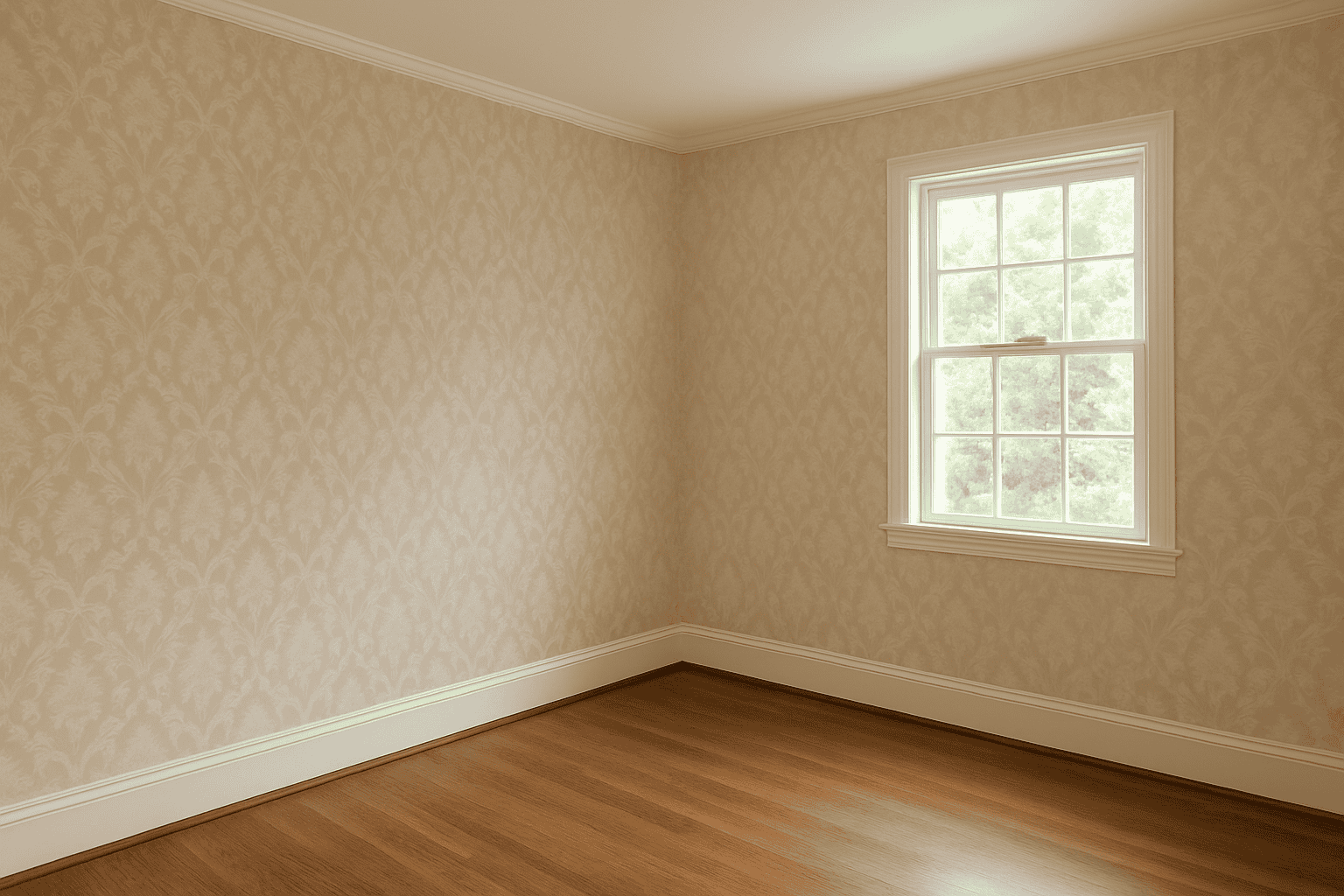
Why Paint Over Wallpaper Instead Of Removing It
Some wallpaper comes off clean. Some does not. And some takes half your drywall with it.
Many homes in Schertz, TX have older drywall, textured walls, or layers of wallpaper from previous owners. Removing it can turn into days of repairs, mudding, sanding, and patching.
Painting over wallpaper can be a smart move if:
- The wallpaper is smooth and firmly attached
- The seams are flat
- There is no mildew
- You need to avoid damaging delicate drywall
- You want quicker results without the mess of steaming and scraping
If humidity levels, leaks, or age created bubbling, then complete removal may be needed. But when the surface is stable, how to paint over wallpaper becomes a practical solution that saves both time and your walls.
Before You Start: Know Which Wallpaper Can Be Painted
Not all wallpaper accepts paint well. Here’s how to tell the difference.
Good Candidates
- Paper wallpaper
- Paper-backed vinyl wallpaper that is fully bonded
- Smooth surfaces without texture
- Dry, clean surfaces free of mildew
Not Good For Painting
- Fabric-backed vinyl
- Textured wallpaper
- Peel and stick wallpaper
- Wallpaper with loose seams everywhere
Some wallpapers look fine at first glance, but a flashlight held sideways can reveal bubbling or lifting. A surface like that won’t stay bonded once paint hits it.
One thing that helps during color planning is understanding how paint reacts to light. This is where tools like does paint dry darker or lighter come in, especially if you’re worried about how a color settles on top of older wallpaper.
Tools And Materials Needed To Paint Over Wallpaper
You don’t need an aisle of equipment, but the right combination makes a huge difference in quality.
- Oil-based primer
- Interior acrylic paint
- Joint compound
- Fiberglass seam tape
- Caulk
- Drywall sanding screen
- Paint roller and brush
- Utility knife
- Clean rags
- Putty knife
- Painter’s tape
- Flashlight for inspecting seams
- Drop cloths
Using a strong oil-based primer helps block stains, tannins, and adhesive bleed through wallpaper.
Step By Step: How To Paint Over Wallpaper Properly
This section breaks down the full process expert painters use in Schertz, TX when prepping wallpapered walls. Every step matters because paint alone won’t hide imperfections.
1. Inspect And Tighten Loose Wallpaper
Walk the room slowly and look at every seam. A flashlight at a low angle helps spot lifting sections. Any loose piece becomes a future bubble.
- Cut away loose edges carefully
- Remove raised corners
- Press remaining edges flat
- Caulk gaps around trim or windows
A smooth surface is your foundation. And if you’re thinking about how sheen affects the final look, this is a good moment to review sheen finish for each room since glossier finishes highlight imperfections more than flat ones.
2. Clean The Wallpaper
Paint sticks best to a clean surface.
- Wipe down with a damp cloth
- Remove dust, grease, and residue
- Do not oversoak the wallpaper
Some wallpapers trap more dust than you think. Leaving it behind affects adhesion.
3. Seal The Surface With Oil Based Primer
Primer is the barrier between the wallpaper and your new paint color.
- Cut in edges with a brush
- Roll primer evenly
- Cover seams carefully
- Let it dry fully
Oil-based primer prevents the moisture in paint from loosening the wallpaper and keeps stains from bleeding through.
If you’re selecting paint colors for after priming, using paint color visualizers helps you visualize new tones against existing lighting.
4. Tape And Mud The Seams
Even the flattest wallpaper has visible seams. Professional painters always cover them.
- Apply fiberglass seam tape along every seam
- Spread a thin layer of joint compound
- Smooth it out to blend with the wall
- Let it dry, then sand lightly
This creates a smooth, uniform surface so the final coat looks like true drywall.
5. Add A Second Layer Of Primer
After sanding, the surface becomes porous. A second coat of primer locks everything down and prepares it for paint.
6. Apply Two Coats Of Interior Paint
Use quality acrylic paint for walls. It offers strong adhesion and resists mildew, fading, and everyday wear.
- Apply coat one
- Let it dry
- Apply coat two
Two coats give you the color depth and coverage you expect. If your wallpaper was dark or patterned, you may need a third coat for full coverage.
Common Mistakes When Painting Over Wallpaper
Painting over wallpaper is possible, but it’s easy to mess up without the right steps.
Here are the most common slip-ups:
- Skipping primer
- Painting over lifting seams
- Using water water-based primer
- Painting over mildew
- Applying paint before the surface is bone dry
- Not covering seams with compound
- Using gloss paint on imperfect surfaces
If any of these happen, peeling, bubbling, or visible seams often show up later.
Choosing Paint For Wallpapered Walls
Homes in Schertz often deal with sun exposure, humidity shifts, and room-specific conditions. Here’s what works well:
Recommended Paint Types
- Acrylic paint for living rooms, bedrooms, hallways
- Satin for moderate moisture areas like bathrooms
- Eggshell for a softer, forgiving finish
- Semi gloss for trim, windows, or kitchens
- Primer that blocks mildew and adhesive bleed
If trim also needs work during the project, refer to how to paint trim so you match the sheen and finish correctly.
Final Thought: A Fresh Start Without The Mess
If your wallpaper is bonded tight and in solid condition, learning how to paint over wallpaper gives you a clean path to new colors without tearing apart your walls. Primer, seam work, and patient prep matter more than anything. Once those steps are handled, your new finish can look like a total makeover.
Here’s how Magna Painting can help bring it all together:
- Careful inspection of your wallpaper
- Clean and controlled prep work
- Professional priming and seam repair
- Smooth finish painting tailored to your home
- Guidance on color, sheen, and interior finishes
If you live in Cibolo, Leon Springs, Garden Ridge and the surrounding areas, call us at 210-796-6601 for a free estimate and a smooth, beautiful finish that stands up to everyday life in Schertz, TX.