
A cedar fence looks sharp when it is new: rich, warm tones, clean grain, and that fresh-milled scent. But without the right protection, a San Antonio summer can turn that same cedar gray, cracked, and rough in under a year. If you have wondered what the best stain for cedar fence really is, especially in South Texas heat, this breaks it down by type, by performance, and by what actually holds up through August in Helotes or Boerne.
Key Takeaways
- Oil-based semi-transparent stain is the most effective choice for cedar fences in San Antonio’s climate.
- Cedar’s natural oils can resist water-based stains, causing blotchy, uneven results.
- San Antonio’s UV index hits extreme levels of 11 to 12 from April through August, which makes UV blockers non-negotiable.
- The 3 main stain types, transparent, semi-transparent, and solid, each serve a different purpose.
- Staining in spring or early fall gives the best penetration and the longest-lasting results.
- A professional application beats DIY on even coverage, proper prep, and lasting protection.
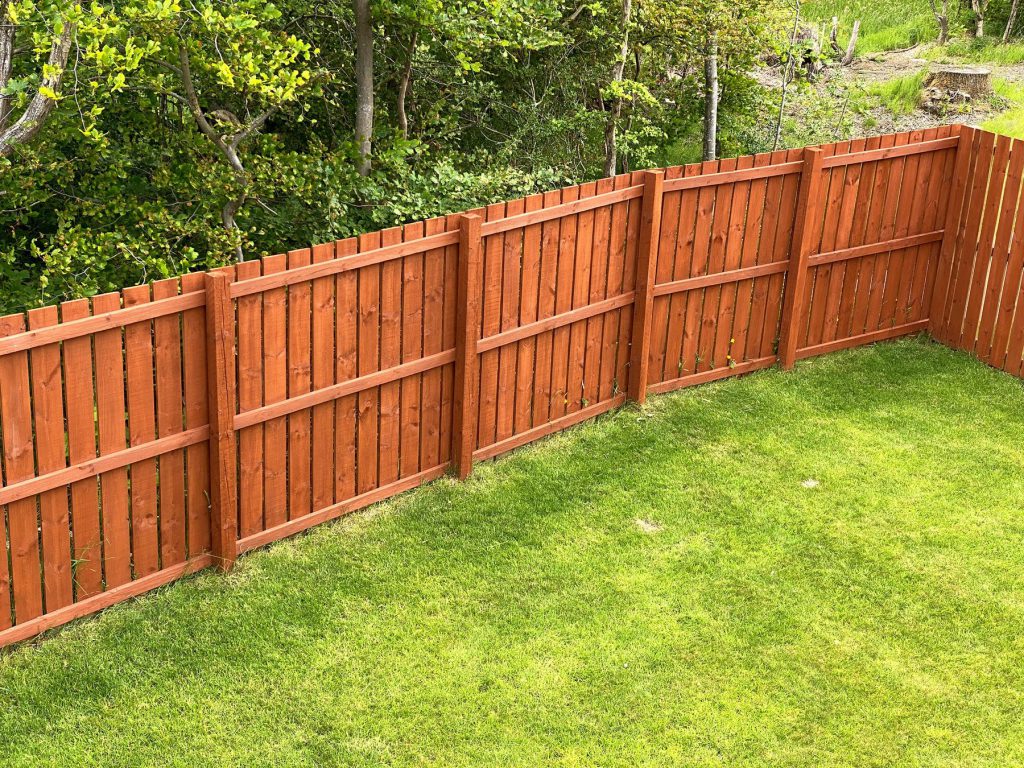
Why a Cedar Fence in San Antonio Needs the Right Stain
Cedar is popular for fences thanks to its natural beauty, durability, and rot resistance. Even so, it still benefits from care, since staining protects the wood from moisture, sun, and aging. San Antonio’s climate just pushes cedar harder than most.
From April to August, the local UV index reaches extreme levels of 11 to 12 on the EPA’s UV Index scale, with a burn time of only 10 minutes. The same radiation that burns skin also breaks down wood. UV rays degrade the lignin that binds wood fibers, which leads to graying, splintering, and a rough surface.
New cedar shows a reddish-brown color and a fresh scent, but sun and rain wash that out within several months to a year, leaving it silvery gray. The right stain stops that process and keeps the fence looking the way it did the day you installed it.
Oil-Based vs. Water-Based: The Best Stain for Cedar Fence
This is where most homeowners go wrong. The base formula matters more than the brand name, because cedar’s chemistry rejects the wrong one. Cedar’s natural oils can keep water-based stains from absorbing evenly, which leaves a blotchy finish that shows from 15 feet away.
Oil-based stains work with that chemistry instead of against it. They penetrate untreated wood deeply and protect it from the inside out, which is why an oil-based semi-transparent is widely considered the best stain for cedar fence. In Texas heat, oil-based typically holds 3 to 4 years versus 2 to 3 years for water-based.
Water-based stains still have their place. They dry faster, emit fewer VOCs, and clean up with soap and water. One caution: if your fence already wears a water-based coat, oil-based can pool on the surface instead of penetrating, so matching the existing base matters.
For the broader oil versus water chemistry on exterior wood, our breakdown of oil vs. latex exterior paint covers the same trade-offs that apply to a fence.
The 3 Stain Types for Cedar Fences, Ranked for San Antonio
1. Semi-Transparent Oil-Based Stain: Best Overall for Cedar
This is the category that performs best for most San Antonio cedar fences. Semi-transparent stains penetrate the surface and add color while letting the grain show through. They carry UV inhibitors that shield the wood from graying, which makes them the best stain for cedar fence in a high-UV market.
For cedar specifically, the semi-transparent finish is ideal because it shows off the natural grain, the main reason people choose cedar in the first place. Fresh cedar has a rich reddish tone that weathers to gray if left bare, and this formula holds that color while blocking UV.
2. Transparent Oil-Based Stain: Best for New Cedar
Transparency refers to how much grain shows through, and the more transparent the stain, the more wood you see. On brand-new cedar in excellent condition, a transparent stain lets the wood speak for itself.
The trade-off is less UV protection than a semi-transparent, so you will reapply more often. In a high-UV market like San Antonio, Helotes, or Bulverde, that means a shorter window between coats.
3. Solid Color Stain: Best for Older or Weathered Fences
When a fence has sat unstained for several seasons, the wood may have grayed or developed surface flaws. Solid stains do not look as natural, but they deliver the most UV protection and the most color uniformity, which helps on older or mixed-board fences.
They also give you the most control over the final shade, which matters for HOA color requirements. The trade-off is that solid stains behave more like paint, so they can eventually peel as Texas heat cycles the boards through expansion and contraction.
Top Stain Products That Perform in Texas Heat
A few products come up consistently among Texas painting and fencing pros. Any of these can be the best stain for cedar fence when matched to your boards and exposure.
Ready Seal
Ready Seal is used widely across Texas. This professional-grade oil-based semi-transparent stain and sealer protects and beautifies cedar in one step, and it is the most forgiving to apply among the top options.
Wood Defender
Wood Defender is a Texas-developed staple, made by Standard Paints in Dallas specifically for the Texas climate. It has more than 20 years of track record in high-UV conditions.
Cabot Australian Timber Oil
Cabot’s Australian Timber Oil is a penetrating oil formula well-suited to cedar. It protects the wood while adding a more lustrous, deeper look than many competing stains.
Sherwin-Williams SuperDeck
SuperDeck comes in both oil-based and waterborne formulas across a range of opacities. The waterborne version can go on damp wood, so many jobs finish in a single day.
Behr Semi-Transparent
Behr semi-transparent stains are easy to find and perform well when applied correctly. For matching a fence to your home’s exterior, Behr offers a wider color range than some specialty brands. You can preview shades with free paint color visualizer tools before you commit.
What Actually Makes a Cedar Fence Stain Last in San Antonio
The right product is only half of it. How and when the stain goes on matters just as much.
Prep is non-negotiable. You cannot stain cedar without cleaning it first, and skipping that is the most common cause of early stain failure. Even new cedar carries mill glaze and surface oils that block penetration.
Timing matters. The best window is cooler, milder months, so aim for January through March in Texas, or early fall if spring has passed. Apply between 50 and 85°F with low humidity, and avoid staining within 24 hours of rain.
Do not over-apply. One thorough coat penetrates better than two rushed coats that sit on the surface.
Know when to re-stain. Sprinkle a few drops of water on the boards: if they bead up, the stain is still working; if they soak in, it is time for a fresh coat. In San Antonio, plan on re-staining every 2 to 3 years, since intense UV breaks down cedar’s protective oils faster than milder climates.
How Staining a Cedar Fence Compares to Painting It
Some homeowners weigh paint against stain, and the difference is worth understanding first. Paint gives solid color and UV protection but tends to peel when temperatures spike. Stain penetrates the wood, highlights the grain, and resists peeling, which makes it the smarter choice for this climate.
Paint still works for specific cases, mainly when you want a solid, uniform color that matches trim or siding. For how the main coating types compare, our breakdown of different exterior coating types is a useful reference.
When you weigh the ongoing cost of maintaining a stained fence against other exterior work, our look at what affects exterior painting cost the most lays out the factors that drive pricing.
Why Professional Application Makes a Difference
A fence staining job looks simple until you are three boards in and the coverage is uneven, the stain is flashing in the sun, or lap marks run down every picket. Pros choose stains built for hot, sunny climates and apply them with the prep and technique that make the finish penetrate and cure correctly. That is the difference between years of protection and a fresh look that fades in months.
Magna Painting of San Antonio handles fence staining the same way it handles every job: no payment until the work is 100% complete and exceeds your expectations. That standard traces back to how Robert Villarreal built this company. Our professional deck and fence staining service covers the full process, from prep to final coat.
Whether your fence runs along a Boerne property line or frames a backyard in Shavano Park, we will look at what you have, recommend the best stain for cedar fence for your specific boards and exposure, and handle the prep and application the right way. Call 210-796-6601 for a FREE estimate today.