Most people focus on the paint color when planning a painting project. The color gets all the attention, but the layer underneath often matters just as much. That layer is paint primer.
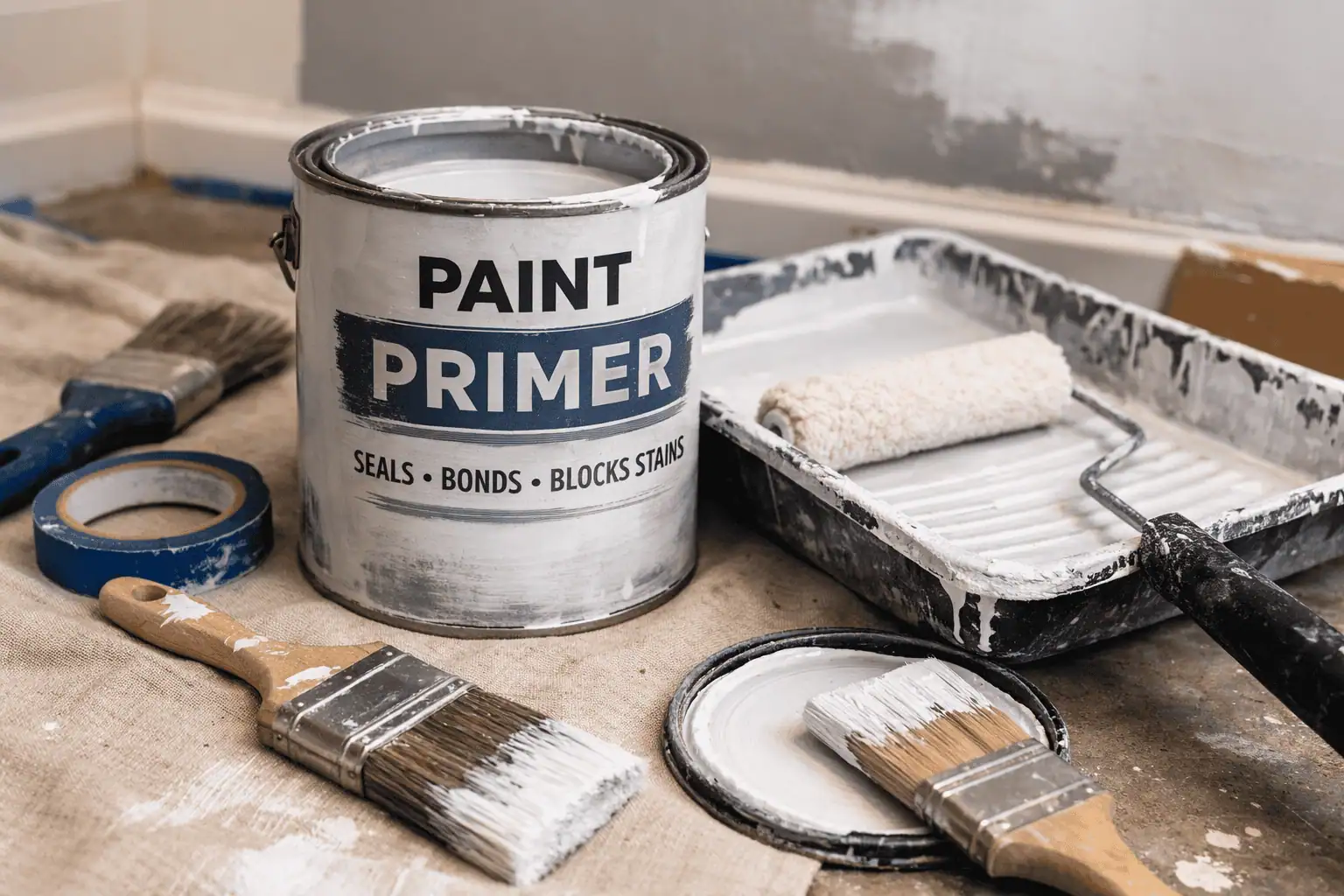
Primer prepares the surface so the paint can bond properly. Without it, paint may struggle to stick, the color may look uneven, or stains may show through the finish coat. When primer is used correctly, the paint lasts longer and performs the way it should.
For many painting projects, paint primer is the step that determines whether the final result holds up for years or begins to fail much sooner.
Key Takeaways:
What Paint Primer Actually Does
At a basic level, paint primer prepares a surface so paint can bond to it evenly.
Surfaces such as drywall, wood, metal, and masonry all have different textures and levels of porosity. If paint is applied directly to these materials, the surface may absorb the paint unevenly.
Primer acts as a bonding layer between the surface and the paint.
This layer helps the paint spread evenly while also improving durability. In many cases, primer also seals the surface so the finish coat maintains consistent color.
Without primer, surfaces like drywall or wood may absorb paint in patches. That can lead to uneven coverage and additional coats of paint.
When Paint Primer Is Usually Needed
Not every painting situation requires primer, but many surfaces benefit from it.
Primer is commonly used when painting new materials or when the existing surface has stains or damage.
Situations that often require paint primer include:
- New drywall or plaster surfaces
- Bare wood or unfinished trim
- Surfaces with water or smoke stains
- Areas that were patched or repaired
- Glossy surfaces that paint struggles to adhere to
Using primer in these situations creates a stable surface so the paint bonds evenly.
Types Of Paint Primer
Different surfaces require different types of primer. Choosing the correct product improves adhesion and helps the paint system perform properly.
Below are some of the most common primer options used in residential and commercial painting.
Acrylic Latex Primer
Acrylic latex primer is one of the most widely used products in modern painting.
This type of paint primer works well on drywall, wood, and previously painted surfaces. Because it is water-based, it typically releases fewer volatile organic compounds compared with many oil-based primers.
Acrylic primers are popular because they dry quickly and clean up easily with water. They are often used for interior walls, ceilings, and trim.
Oil-Based Primer
Oil-based primers are known for their ability to seal surfaces and block stains.
This type of paint primer is often used when surfaces have water stains, smoke damage, or heavy discoloration. Oil-based primers can also seal wood tannins that might otherwise bleed through the paint.
These primers create a strong barrier between the surface and the finish coat.
However, oil-based primers typically produce stronger odors and require solvents for cleanup.
Bonding Primer
Some surfaces are difficult for paint to adhere to. Glossy finishes, tile, and certain metal surfaces can cause paint to slide or peel if not prepared properly.
Bonding primer is designed for these situations.
This type of paint primer creates a rougher surface so paint can grip the material more effectively. It is often used when repainting cabinets, trim, or previously coated surfaces.
Bonding primers allow painters to apply a finish coat without extensive sanding.
Stain Blocking Primer
Stain-blocking primer is designed to prevent discoloration from bleeding through the paint.
These stains can come from water damage, smoke, grease, or wood tannins. Without a stain-blocking product, the marks may continue to appear even after multiple coats of paint.
Applying a stain-blocking paint primer seals the surface and creates a clean base for the finish coat. This type of primer is commonly used on ceilings, drywall repairs, and older wood surfaces.
Masonry And Concrete Primer
Brick, concrete, and other masonry surfaces are more porous than typical drywall or wood. Because of that porosity, paint may soak into the material unevenly.
Masonry primer helps seal the surface so paint adheres properly. It also improves durability on surfaces exposed to weather. This type of paint primer is commonly used on exterior walls, concrete foundations, and stucco.
Why Primer Helps Paint Last Longer
Durability is one of the biggest reasons professionals rely on primer. Paint that is applied directly to a surface may struggle to bond. Over time, this weak bond can lead to peeling, cracking, or uneven wear.
Primer improves adhesion so the finish coat forms a stronger connection to the surface. That stronger bond helps the paint resist moisture, mildew, and temperature changes.
In many cases, the right paint primer can extend the life of a paint job by several years.
Primer And Color Coverage
Another benefit of primer is improved color consistency.
When painting a wall a lighter color over a darker one, the original color may show through if primer is not used.
Primer creates a neutral base so the finish coat covers more evenly.
This can reduce the number of paint coats needed and produce a smoother appearance overall.
A Strong Foundation For Any Paint System
While primer is rarely the most visible part of a painting project, it plays a major role in the final result.
The right paint primer prepares the surface, improves adhesion, blocks stains, and helps paint maintain its color and durability.
Skipping primer may seem like a shortcut, but it often leads to uneven coverage or early paint failure.
At Magna Painting, our painting process begins with careful surface preparation and the proper primer selection for each material. That attention to detail helps the final coating perform well and maintain its appearance over time.
Our professional painters in San Antonio, TX often consider factors like sun exposure and temperature changes when choosing primer systems. Selecting the correct primer helps paint hold up under these conditions.
If you are planning a painting project and want results that last, Magna Painting is ready to help.
Call 210-796-6601 for a FREE estimate and learn how our professional team prepares surfaces the right way before the first coat of paint is applied.