
clear something up early. Satin paint vs. matte paint is not a style debate. It is a performance decision that affects how your walls look, how they hold up, and how often they show wear.
The same color can feel calm and soft in one sheen, then sharper and more reflective in another. That difference catches a lot of homeowners off guard.
If you are repainting a room or planning a full update, understanding satin paint vs. matte paint helps avoid frustration later. This guide keeps things practical, clear, and focused on how homes are actually used day to day.
Key Takeaways:
- Satin paint vs. matte paint affects performance, not just style, influencing durability, light reflection, and long-term maintenance in each room.
- Matte paint hides wall imperfections well, making it a strong choice for low-traffic areas and ceilings with uneven surfaces.
- Satin paint handles cleaning and moisture better, which makes it more practical for kitchens, bathrooms, hallways, and busy spaces.
- Lighting changes how sheen looks on the wall, with satin reflecting more light and matte softening color and reducing glare.
- Choosing the right sheen by room use leads to longer-lasting results, reducing touch-ups and premature repainting over time.
Why Paint Sheen Changes More Than People Expect
Color usually gets all the attention, but sheen controls how that color behaves once it is on the wall. Light reflection, surface texture, and durability all shift based on sheen choice. Satin paint vs. matte paint sits close on the sheen scale, yet they behave very differently once a space is lived in.
Sheen impacts more than appearance. It affects how walls react to water, fingerprints, dust, and cleaning. It also determines how surface flaws show through, especially on older drywall or patched areas.
A few factors that directly influence include:
-
How much light bounces around a room
-
How visible dents and wall repairs appear
-
How often walls can be wiped down
-
How evenly color looks once dry
This is why satin paint vs. matte paint should match the space, not just the color palette.
Matte Paint And Its Soft, Low-Profile Look

Matte paint sits at the lowest end of the sheen range. It has little to no gloss, giving walls a smooth, understated finish. Many homeowners prefer matte because it feels calm and visually clean.
Where Matte Paint Works Best
Matte paint performs well on broad wall surfaces where glare is not welcome.
Common areas include:
-
Bedrooms
-
Dining rooms
-
Living rooms with controlled lighting
-
Ceilings
Because matte absorbs light rather than reflecting it, it helps disguise surface flaws. Minor drywall waves, patch marks, and older repairs tend to blend in better.
Color appearance can also shift based on sheen. That same topic comes up when explaining does paint dry darker or lighter, especially when comparing finishes under different lighting conditions.
Benefits Of Matte Paint
Matte paint has several advantages:
-
Excellent at hiding imperfections
-
Smooth, even appearance
-
Strong coverage due to higher pigment levels
-
Lower cost compared to satin
For older homes or walls that are not perfectly smooth, matte paint often delivers the cleanest visual result.
Limitations Of Matte Paint
Matte paint does have tradeoffs.
-
Does not tolerate frequent cleaning
-
Scuffs show faster in busy areas
-
Not suitable for trim, doors, or damp spaces
-
Can stain if spills sit too long
In satin paint vs. matte paint comparisons, matte wins on appearance but falls short on durability.
Satin Paint And Its Practical Advantages

Satin paint sits above eggshell and below semi-gloss on the sheen scale. It reflects more light than matte, yet avoids a shiny finish. That balance makes satin one of the most versatile options in a home.
Where Satin Paint Makes Sense
Satin paint performs best in areas that see hands, moisture, and frequent use.
Typical applications include:
-
Hallways and entryways
-
Kitchens and bathrooms
-
Kids’ rooms
-
Doors, trim, and window frames
Satin paint contains more binders, which improves adhesion and flexibility once cured. That added strength helps surfaces hold up over time.
If you are coordinating finishes throughout a home, matching sheen to room function matters. This approach aligns with guidance outlined in the sheen finish for each room, where use patterns guide sheen selection.
Strengths Of Satin Paint
Satin paint offers several practical benefits:
-
Easier to clean than matte
-
Better resistance to moisture
-
Suitable for walls and trim
-
Adds subtle brightness to spaces
Satin works especially well with latex and acrylic paint formulas designed to resist mildew in kitchens and bathrooms.
Drawbacks Of Satin Paint
Satin paint is not flawless.
-
Highlights surface imperfections more than matte
-
Can show roller marks if prep is rushed
-
Costs slightly more per gallon
-
May reflect too much light in sunny rooms
In satin paint vs. matte paint decisions, satin often wins where durability matters most.
How Lighting Affects Sheen And Color
Lighting changes everything. Natural light, overhead fixtures, and even lamp placement influence how sheen appears on the wall.
Satin paint reflects light, which:
-
Brightens rooms
-
Shows wall texture
-
Emphasizes surface details
Matte paint absorbs light, which:
-
Softens color tones
-
Reduces glare
-
Makes walls appear smoother
In smaller or darker rooms, matte can make walls feel heavier. In contrast, satin can visually open a space. This same idea applies outdoors when choosing exterior paint types for siding, brick, or stucco exposed to direct sunlight.
Durability And Cleaning Over Time
Durability often becomes the deciding factor in satin paint vs. matte paint choices.
Satin paint forms a tougher surface thanks to added resins. That strength helps it resist:
-
Scuffs and fingerprints
-
Moisture exposure
-
Regular wiping with water
Matte paint lacks that flexibility. While it looks great initially, repeated contact breaks down the surface faster. Even gentle scrubbing can leave marks or uneven spots.
Homes with kids, pets, or frequent guests often benefit from satin paint in active areas.
Cost Differences Between Sheens
Paint pricing varies by brand, yet sheen still affects cost. Matte paint usually costs a few dollars less per gallon than satin.
That difference adds up on larger projects. Still, cost alone should not drive the decision. A lower upfront price does not help if repainting is needed sooner due to wear.
In satin paint vs. matte paint comparisons, value comes from matching sheen to how the space is used.
Special Considerations For Non-Drywall Surfaces
Sheen choice shifts when painting beyond standard drywall.
-
Brick and masonry often benefit from lower sheen to limit glare
-
Concrete surfaces need coatings that support adhesion and moisture control
-
Exterior walls require products designed for water and temperature exposure
Questions also come up about product crossover indoors. That is commonly addressed when discussing can i use exterior paint inside, especially around ventilation and volatile organic compound levels.
Satin Paint Vs. Matte Paint At A Glance
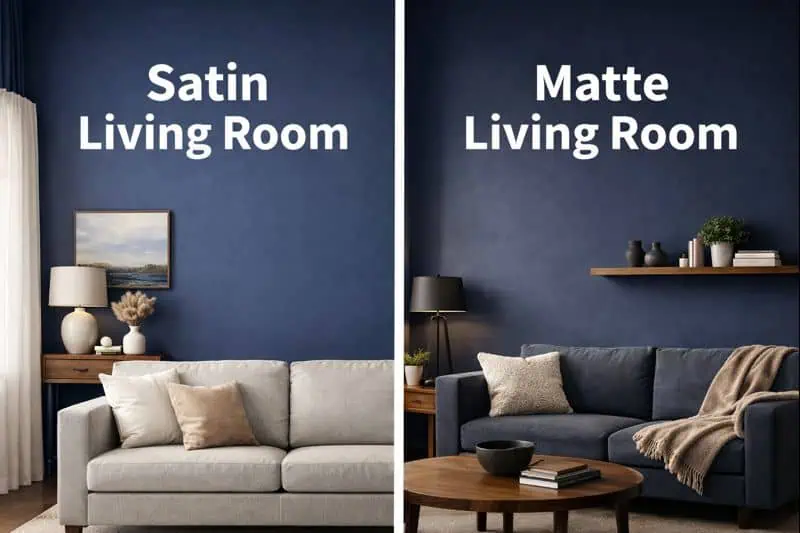
Here is a simplified comparison.
Matte Paint:
-
Low gloss
-
Hides flaws well
-
Lower durability
-
Best for low-traffic rooms
Satin Paint:
-
Soft sheen
-
Easier to clean
-
Stronger surface
-
Ideal for busy areas
This quick view helps frame satin paint vs. matte paint as a functional decision rather than a design trend.
How Color And Sheen Work Together
Sheen changes how color is perceived. Matte deepens tones and mutes brightness. Satin lifts color and adds clarity.
This is why previewing options matters. Tools like paint color visualizers help show how sheen alters color before application begins.
The same shade can feel relaxed in matte and crisp in satin, even with the same primer and color formula.
Final Thoughts On Satin Paint Vs. Matte Paint
Choosing satin paint vs. matte paint comes down to how a space is used and how much wear the walls will see. Matte offers softness and hides flaws, while satin handles cleaning and traffic better. Matching sheen to function leads to finishes that last and look consistent over time.
How Magna Painting helps you get it right:
-
Careful surface prep using proper primer and materials
-
Sheen recommendations based on lighting and room use
-
Clean application focused on adhesion and even coverage
-
Final walkthrough to confirm finish expectations
If you are planning an interior painting project in San Antonio, Helotes, Shavano Park, or the surrounding areas, call us at 210-796-6601 for a FREE estimate. We help homeowners make confident paint decisions that hold up long after the project is complete.