
You picked the perfect color for your front door two summers ago. Now it looks chalky, dull, and 10 years older than it should. Most San Antonio homeowners assume they picked the wrong color. The actual problem is the combination of UV index 7 summer sun, August surface temperatures over 96°F, and the wrong finish chemistry for a Texas exterior.
According to NOAA UV index forecast data, San Antonio reaches a UV index of 7 from June through August, with July averaging 10.3 hours of sunshine per day. Standard exterior paint can fail within 24 to 36 months on south- and west-facing doors here.
This guide covers the six paint finishes that hold up to San Antonio’s heat and UV, the color strategies that fight fading, and the application timing that determines how long your finish actually lasts.
Key Takeaways
- Semi-gloss and satin finishes deliver the best durability against San Antonio’s UV index 7 summer sun.
- UV-resistant paints are not a luxury upgrade in Texas. They are a baseline requirement for results that last.
- Premium products like Benjamin Moore Aura and Sherwin-Williams Duration outlast budget paint by 2 to 3 times.
- Higher sheen finishes contain more binders, which create harder, smoother surfaces that resist UV.
- Surface preparation matters more than paint brand for door longevity.
- Light colors reflect heat better than dark ones, reducing paint stress and fading.
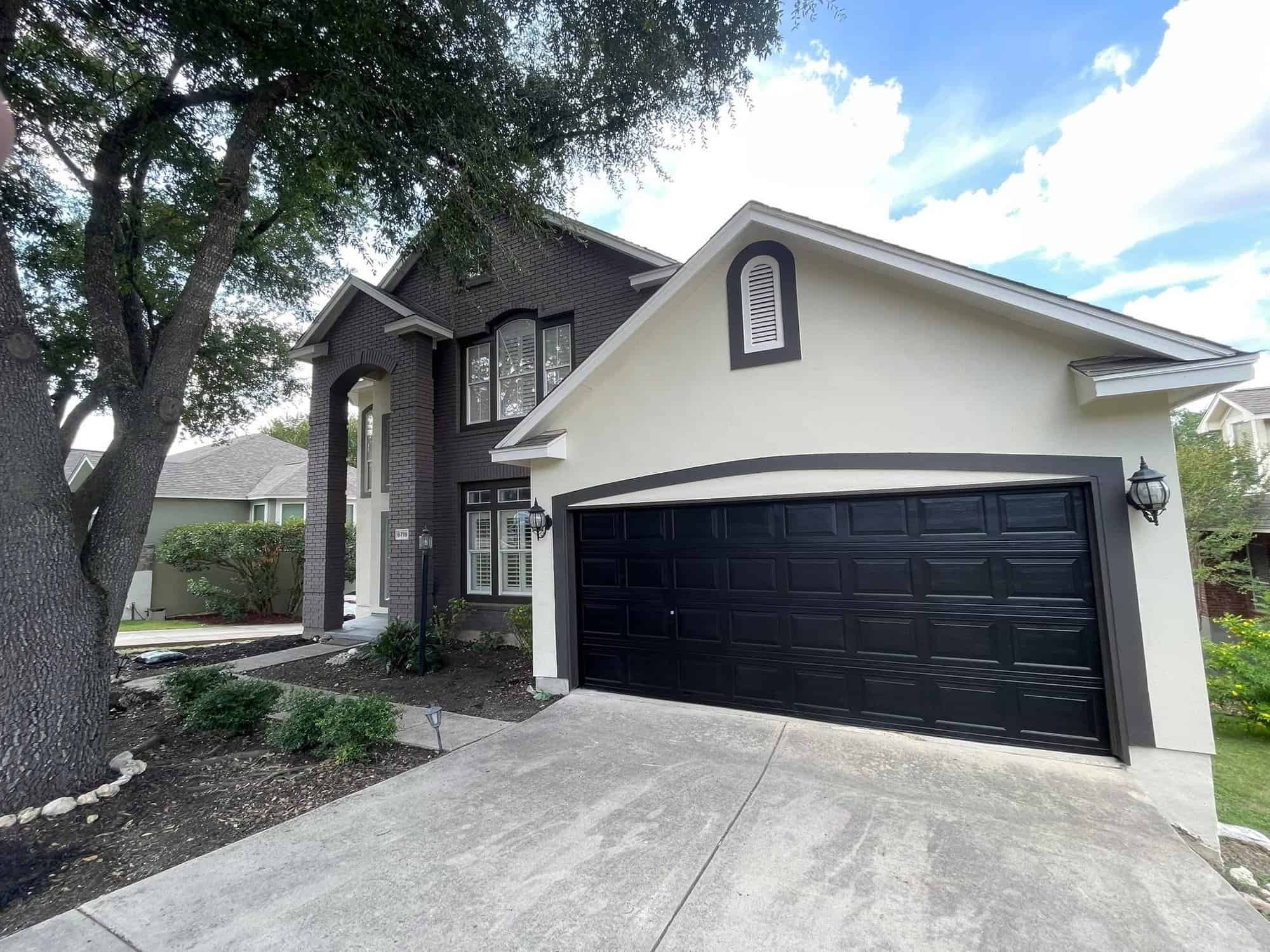
Why San Antonio’s Climate Is Hard on Door Paint
San Antonio sits in a humid subtropical climate zone (Köppen Cfa) that combines intense solar radiation, prolonged heat, and meaningful rainfall throughout the year. Your front door faces this challenge head-on, often without the protection of overhangs or shade.
The UV Stress Mechanism
UV breaks down the chemical bonds in paint pigments and binders. When ultraviolet rays hit a painted surface repeatedly over time, the polymer chains in the paint film degrade, which produces fading, chalking, and brittleness.
San Antonio’s UV index 7 from June through August puts your door in the “high exposure” range for 90+ days per year.
The Heat Multiplier
August averages 96.6°F daily highs, with surface temperatures on south-facing doors regularly exceeding 130°F. That heat dries paint out, makes it brittle, and starts the chalking process within months on cheap finishes.
Dark colors absorb even more heat. A deep navy door in full San Antonio sun can hit 150°F surface temperature, which accelerates binder breakdown.
Why Texas Differs from Desert Climates
Unlike Phoenix, San Antonio gets meaningful rainfall throughout the year. May averages 3.66 inches of rain, and September averages 3.39 inches.
This means paint contends with both UV-driven drying extremes and moisture infiltration. The expansion-contraction cycle accelerates failure on doors that get direct sun.
6 Fade-Resistant Finishes for San Antonio Front Doors
1. Semi-Gloss Acrylic Latex
Semi-gloss is the finish most professional painters recommend for San Antonio front doors. The higher sheen reflects more UV than satin or flat finishes, and the higher binder content creates a harder, more moisture-resistant film.
Semi-gloss is particularly valuable for south- and west-facing doors that take afternoon sun. The reflective surface bounces UV away instead of absorbing it.
2. Satin Premium Acrylic
Satin offers a softer sheen that hides imperfections better than semi-gloss while still delivering solid UV protection. Look for products specifically labeled “UV-resistant” or “fade-resistant.”
These finishes work well on east- or west-facing doors and traditional home styles. Plan for 6 to 9 years of color hold with regular maintenance.
3. Benjamin Moore Aura Exterior in Semi-Gloss
Benjamin Moore Aura includes proprietary Color Lock technology that binds pigment more tightly to the resin matrix. The result is exceptional color retention even on south-facing doors that take direct Texas sun.
Expect 8 to 10 years of color hold on properly prepared doors with this product. The high-build formula also reduces the number of coats needed.
4. Sherwin-Williams Duration Semi-Gloss
Duration uses advanced acrylic technology that handles temperature cycling without cracking. The thick, self-priming formula offers strong UV resistance and built-in mildew protection.
The mildew resistance matters in San Antonio’s rainy season when humidity stays elevated for weeks at a time.
5. PPG Permanizer Exterior in Semi-Gloss
PPG Permanizer is engineered for intense sunlight and high humidity. The formula resists mildew and algae growth while delivering UV protection.
It is a strong middle option between budget acrylic and premium products like Aura, with comparable durability at a lower per-gallon price.
6. 100% Acrylic Latex with UV Blockers
100% acrylic latex with built-in UV blockers is the right baseline for any San Antonio door. The acrylic resin creates a flexible film that expands and contracts without cracking.
Look for products labeled “UV-resistant,” “fade-proof,” or “made for high sun exposure.” Standard acrylic without these additives can fade noticeably within 2 to 3 years in Texas conditions.
What Makes These Finishes Work in Texas Heat
The science behind fade resistance comes down to three factors: reflection, chemical stability, and flexibility.
UV Reflection
Higher sheens reflect more UV. Flat finishes absorb UV into the binder, where it breaks down polymer chains and produces chalking.
Semi-gloss and high-gloss bounce UV away from the surface. The higher the sheen, the slower the fade.
Chemical Stability
UV-resistant paints contain light stabilizers and UV absorbers that capture UV energy and convert it to heat instead of letting it break down pigments.
Without these additives, even premium acrylic latex will fade in San Antonio sun within 3 to 4 years on south-facing doors.
Flexibility
Acrylic exterior paint outlasts oil-based products in Texas heat because the acrylic resin expands and contracts with temperature swings without cracking.
Oil-based paint produces a hard, durable surface but becomes brittle over time and cracks under thermal stress. Modern professionals favor 100% acrylic latex for nearly all exterior door applications in Texas.
Color Considerations for Maximum Fade Resistance
Color choice affects how long your paint lasts, not just how it looks. Lighter colors reflect UV and heat. Darker colors absorb both.
Most Fade-Resistant Colors
Whites, off-whites, soft pastels, and earth tones reflect more sunlight and hold up longest in San Antonio’s direct exposure. Mid-tone grays and muted greens also perform well.
These colors retain their appearance the longest under UV index 7 summers and the heat-absorption stress that comes with southern exposure.
Colors That Fade Faster
Reds fade fastest because of how iron-oxide and synthetic red pigments interact with UV. Deep blues, bright yellows, and black absorb more heat and accelerate binder breakdown.
If you love a bold color, expect to refresh every 3 to 4 years on south- and west-facing doors. Premium UV-resistant formulations can stretch this to 5 to 6 years.
The Strategic Compromise
Use lighter tones for the door surface and bold accents for trim, knockers, or hardware. This approach gives you the curb appeal you want without the 3-year repaint cycle that bold doors usually demand.
Application Tips for Long-Lasting Results
The best fade-resistant paint underperforms when applied incorrectly. Three application factors determine actual lifespan.
Surface Preparation Is Foundational
Federal Highway Administration research shows up to 80% of premature paint failures trace back to deficient surface preparation, not bad product choice.
Proper prep includes washing the door, sanding glossy areas, filling cracks, and priming bare or stained spots before topcoat goes on. Skipping any step compromises everything that follows.
Use the Right Primer
In San Antonio’s climate, exterior primer is non-negotiable. Heat and UV break down paint faster on unprimed surfaces, especially at the substrate interface where the topcoat actually bonds.
Use acrylic primer for fiberglass and wood doors. Use rust-inhibiting primer for steel doors. For more on this, see our guide on paint primer for exterior door.
Time the Application Around Heat
Avoid painting during the hottest parts of the day. Extreme summer heat causes paint to skin over before it bonds, which produces blistering and adhesion failure within months.
Apply two thin coats in the shade or in early morning, not in direct sun. Ideal application conditions are 60°F to 85°F with low humidity.
What Professional Painters Use in San Antonio
Local contractors consistently choose specific products that hold up to Texas conditions. Paint quality is a significant factor in total project cost, but it pays back through extended life.
Why Acrylic Beats Oil in Texas
Oil-based paints provide a hard, durable finish but tend to chalk and fade faster than quality acrylics under intense UV. Oil also yellows over time, which produces visible color shift on whites and lighter tones.
Most professionals in Texas now recommend premium acrylic latex for nearly all door applications. Our oil vs latex exterior paint comparison covers the chemistry trade-offs in detail.
The Cost-Per-Year Math
Premium UV-resistant paints cost $20 to $40 more per gallon than budget options. If premium paint lasts 8 years and budget paint lasts 3, the premium product saves you 2 full repaint cycles over the same window.
For more on total project budgeting, see our breakdown of what affects exterior painting cost.
Maintenance and Inspection
A quality exterior paint job lasts 8 to 10 years nationally, but San Antonio’s UV exposure typically reduces this to 5 to 7 years on doors. High-exposure south- and west-facing doors trend toward the lower end.
Annual Cleaning
Clean your door with mild detergent and a soft cloth twice a year. Remove pollen, mildew, and airborne grime that accumulate on the surface and accelerate paint breakdown.
Avoid abrasive scrubbers and high-pressure washing on doors. Both strip the paint film faster than expected.
Twice-Yearly Inspection
Inspect your door every spring and fall. Look for chalking (white powdery residue when you wipe), gloss reduction, hairline cracks, or color shift on south-facing exposure.
Catching these signs early means a 10-minute touch up. Ignoring them means a full repaint within a year.
Touch Up Promptly
A small tube of matching paint kept in the garage prevents minor failures from becoming full repaints. Acting on chips within a week or two keeps moisture from getting under the surrounding paint film.
For more on different exterior products, see our exterior paint types comparison guide.
You picked the right color. The finish protects that choice. Whether you need a single front door refreshed before next summer or a full exterior repaint planned for spring, our team at Magna Painting will walk you through the products and timing that fit your specific door and San Antonio’s UV stress. Call 210-796-6601 for a FREE estimate today.