
If you are staining a deck in Helotes that has been baking through Texas summers, the condition of the wood before you ever open the can is what makes or breaks the job. The best way to stain a deck comes down to the right sequence of decisions, prep, product, timing, and technique, because around here the margin for error is tighter than most guides written for cooler climates admit.
Key Takeaways
- Proper wood prep, not the brand of stain, determines how long the job holds up.
- The water bead test is the clearest signal that your deck is actually ready to accept stain.
- In Helotes, staining when temperatures top 90°F or humidity runs high causes premature peeling.
- Stain opacity should match your deck’s current condition, not just your color preference.
- Back-brushing during application is the step most DIYers skip, and the results show it.
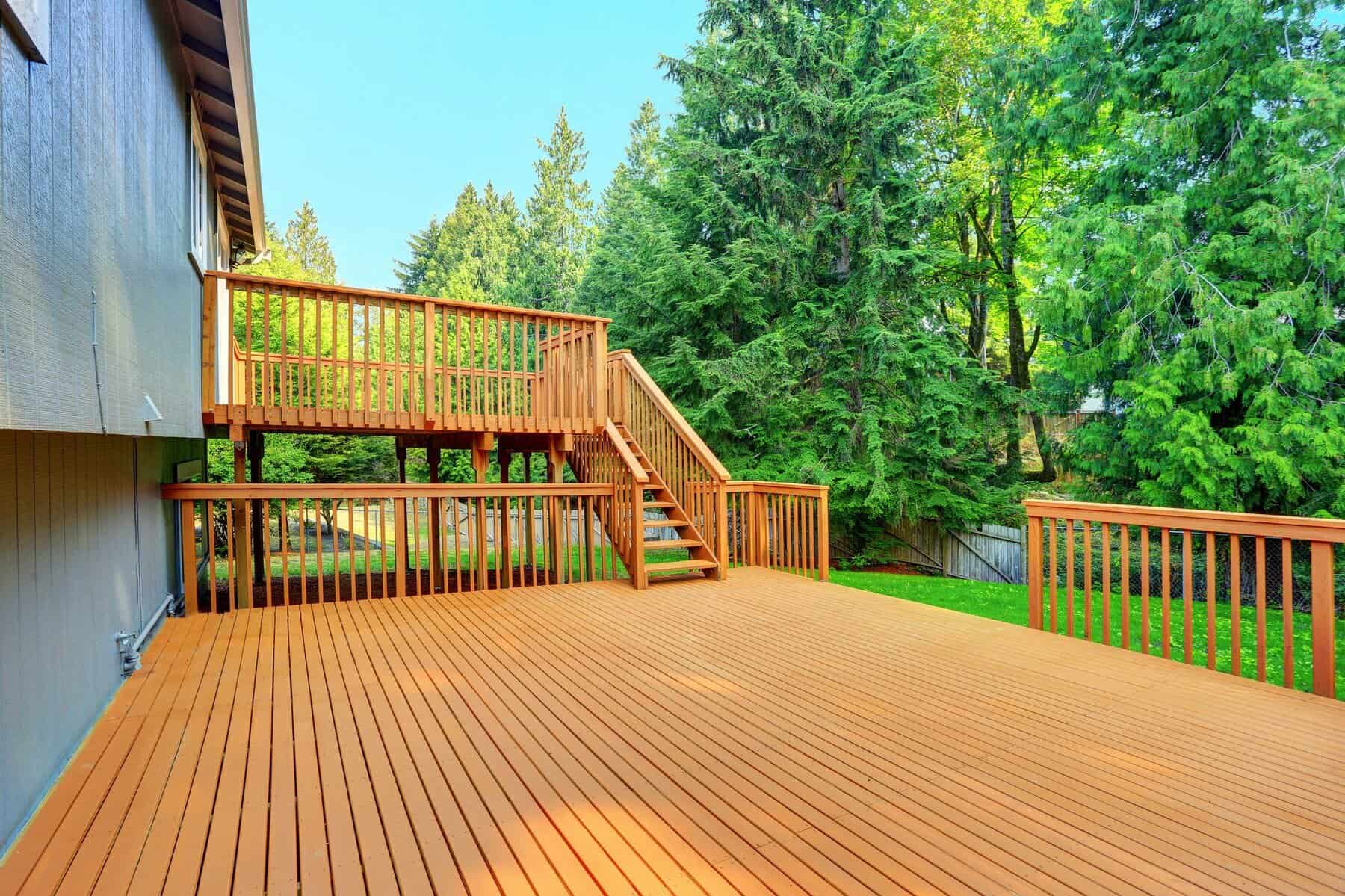
The Best Way to Stain a Deck Starts Before You Open the Can
Walk the deck first. Look for raised fasteners, cracked boards, soft spots from water damage, and any old stain that is peeling or flaking. A failing finish has to come off, since new stain will not bond to it, and any boards rotted through should be replaced rather than coated over.
Once repairs are done, clean the deck thoroughly, because a clean surface is what lets stain soak in and cure. Use a dedicated deck cleaner with a stiff-bristle brush. If you reach for a pressure washer, 1,200 to 1,400 psi with a 45° tip works well, and always spray along the grain.
After cleaning, apply a wood brightener to neutralize the cleaner and open the wood pores so stain penetrates better. This step is easy to skip and expensive to regret, especially on a Helotes deck that has weathered gray from months of direct sun.
The Water Bead Test: Know When Your Deck Is Ready
Here is the simplest readiness check: sprinkle water on the boards. If it beads on the surface, the wood is not ready. If it absorbs quickly, the deck is ready to stain after a light cleaning.
Stain applied to damp wood will not adhere and can crack or peel, so make sure the surface is dry and clean first. In Helotes, allow at least 48 hours of dry weather after cleaning before you apply. Depending on heat and humidity, that drying can take one to three days.
Which Stain Type Works Best for Central Texas Decks?
Opacity, how much grain shows through, should match your deck’s condition and how much maintenance you want to take on. Matching opacity to the wood is a big part of the best way to stain a deck that actually lasts here.
Transparent Stain
Transparent stain gives the fullest view of the grain and works well on newer, clean decks. The trade-off is that it usually needs reapplication every year. In Helotes, where UV is relentless from May through September, that annual refresh adds up fast.
Semi-Transparent Stain
Semi-transparent is the most versatile choice for most residential decks here. A quality penetrating oil- or water-based formula delivers strong protection and good looks, so look for one that specifies high UV resistance and mildewcides. Mold and mildew move fast in Central Texas humidity, and a product without mildewcides is a shortcut you will pay for later.
Semi-Opaque Stain
Semi-opaque adds more color while still letting some texture show. It is a practical pick for decks that have weathered but still have decent wood structure underneath.
Solid or Opaque Stain
Solid stain covers the grain entirely and offers the longest recoat interval, typically 3 to 5 years. If your deck has mismatched boards from past repairs, solid stain pulls that inconsistency together better than any transparent option. The downside is that once it starts to peel, removal is more labor-intensive.
The same thinking applies to other outdoor wood. If you also have a wood fence, our best stain types for cedar fences covers similar decisions ranked for Texas heat.
Timing Your Project: The Texas Variable Most Homeowners Miss
Helotes summer afternoons are not deck-staining weather. When it is too hot, the stain dries too fast, which leaves marks and uneven penetration. Stain when it has not rained for three days and the forecast shows at least two more dry days, with temperatures between 50 and 90°F and low to average humidity.
Direct sun causes the same fast-dry problem before the wood can absorb the stain. On surfaces that get direct light, pick early morning or late afternoon so the stain has hours to soak in before the sun hits hard.
Late spring and early fall are the best times of year, with moderate temperatures and lower humidity for a proper cure. For Helotes, that runs roughly mid-March through late April and again mid-October through November.
4 Deck Stain Application Methods, Ranked
1. Brush: Most Control, Slowest Speed
Natural bristle brushes work stain into the wood fibers better than anything else, and they give the most precision around railings, spindles, and irregular gaps. The method takes the longest but produces the deepest penetration. It is worth it on smaller decks and tricky vertical sections.
2. Pad Applicator on a Pole: Best Balance of Speed and Quality
A pad applicator on a pole, or a pole-equipped roller, covers a large deck fast while staying more accurate than a sprayer. It is less work than brushing by hand and more controlled than spraying. Pros who do deck work regularly reach for this on flat boards because it moves quickly without sacrificing coverage.
3. Roller: Quick, but Needs Follow-Up
Rollers cover ground fast but lay stain unevenly. Use a 1/4-inch or shorter nap to apply thin layers and avoid pooling. Always follow with a brush to work the stain into the grain, since rolling alone leaves too much product sitting on top.
4. Sprayer: Fastest, Highest Risk
A sprayer is the fastest method, but it rewards experience. Overspray means careful masking of plants, siding, and nearby surfaces, and any pooling has to be back-brushed right away. Without sprayer experience, the other three methods will give you a more consistent result.
Application Techniques That Separate Good Jobs From Great Ones
Method gets you coverage; technique gets you longevity. These habits are where the best way to stain a deck pulls ahead of a rushed weekend job.
- Start with the railings. Work the vertical elements first with long, even strokes, then move down to the boards. Cover the deck boards with drop cloths while you do the railings.
- Back-brush. Always follow a roller or pad with a brush to work stain into the wood. Skipping this leaves stain sitting on top of the grain instead of bonded to it, which is exactly where peeling starts.
- Keep a wet edge. Brush 2 to 3 boards at a time, end to end, and brush wet stain into wet stain to avoid lap marks.
- Do not over-apply. More stain is not better. Over-application can peel or crack with moisture, or leave a sticky surface that never fully dries.
- Plan your exit. Stain while moving toward your way out so you do not stain yourself into a corner. Decide before the first stroke whether you are leaving through the house or down the stairs. For the broader approach across outdoor wood, our tips for staining decks, fences, and siding pull it together.
How Long Until You Need to Restain?
That depends on the stain type and how much direct sun your deck takes. On an exposed Helotes deck, transparent stains may need a refresh every 12 to 18 months, while semi-transparent products typically hold 2 to 3 years. Heavy weather and foot traffic can shorten either.
Check it once a year with the water bead test: spray a little water and watch. If it beads, the stain is still repelling moisture and the deck is fine. If it soaks in, it is time to clean and restain.
Sweeping off sand, dust, and debris between coats matters too, since grit grinds down a finish over time. Staying on top of that stretches the life of the coating, and our exterior paint maintenance tips cover the upkeep that protects the work.
When to Hire a Professional Instead
Part of the best way to stain a deck is knowing when not to DIY it. A motivated homeowner can handle the job when the prep is manageable, the deck is solid, and the timing works. A few situations are worth handing to a pro:
- Pre-2004 pressure-treated lumber. Decks built before 2004 may use wood treated with chromated copper arsenate (CCA), and sanding it releases arsenic-laden dust. That is a job for a pro who can contain it safely, and the EPA notes that a regular penetrating stain helps reduce leaching.
- Extensive old stain that needs full stripping before anything new can go down.
- Large decks with tight weather windows, where finishing in one session under the right conditions takes extra hands and equipment.
- A past stain job that failed and you are not sure where the process broke down.
When you weigh DIY against a pro, it helps to know what exterior projects actually cost so you can compare the real numbers, not just the price of a can of stain.
Ready to Stain Your Deck the Right Way?
Your deck takes more punishment per square foot than almost any surface on your property: sun, foot traffic, rain, and temperature swings all season. Getting the best way to stain a deck right means the correct sequence, the correct timing, and the prep most people rush.
Magna Painting of San Antonio handles Helotes decks in the right order, at the right time, with no money collected until the job is finished and you are satisfied. Call 210-796-6601 for a FREE estimate today.