
Summary
Paint forms a film; stain soaks in, and San Antonio's sun changes which one lasts. Here is how to choose the right deck finish for your wood and climate. Call us for free estimates!
If you have been staring at your aging wood deck and asking, should I paint or stain it, you are in good company across Central Texas. Every spring, homeowners in San Antonio, Helotes, Boerne, and Bulverde reach the same crossroads: the deck looks rough, the old finish is fading or peeling, and it is time to do something.
The problem is that deck painting vs staining in San Antonio does not have a simple answer. Both options protect wood, both can look great when done right, and both will fail fast if applied the wrong way. This post lays out the real differences so you can make the right call for your deck, wood type, and long-term goals.
Key Takeaways:
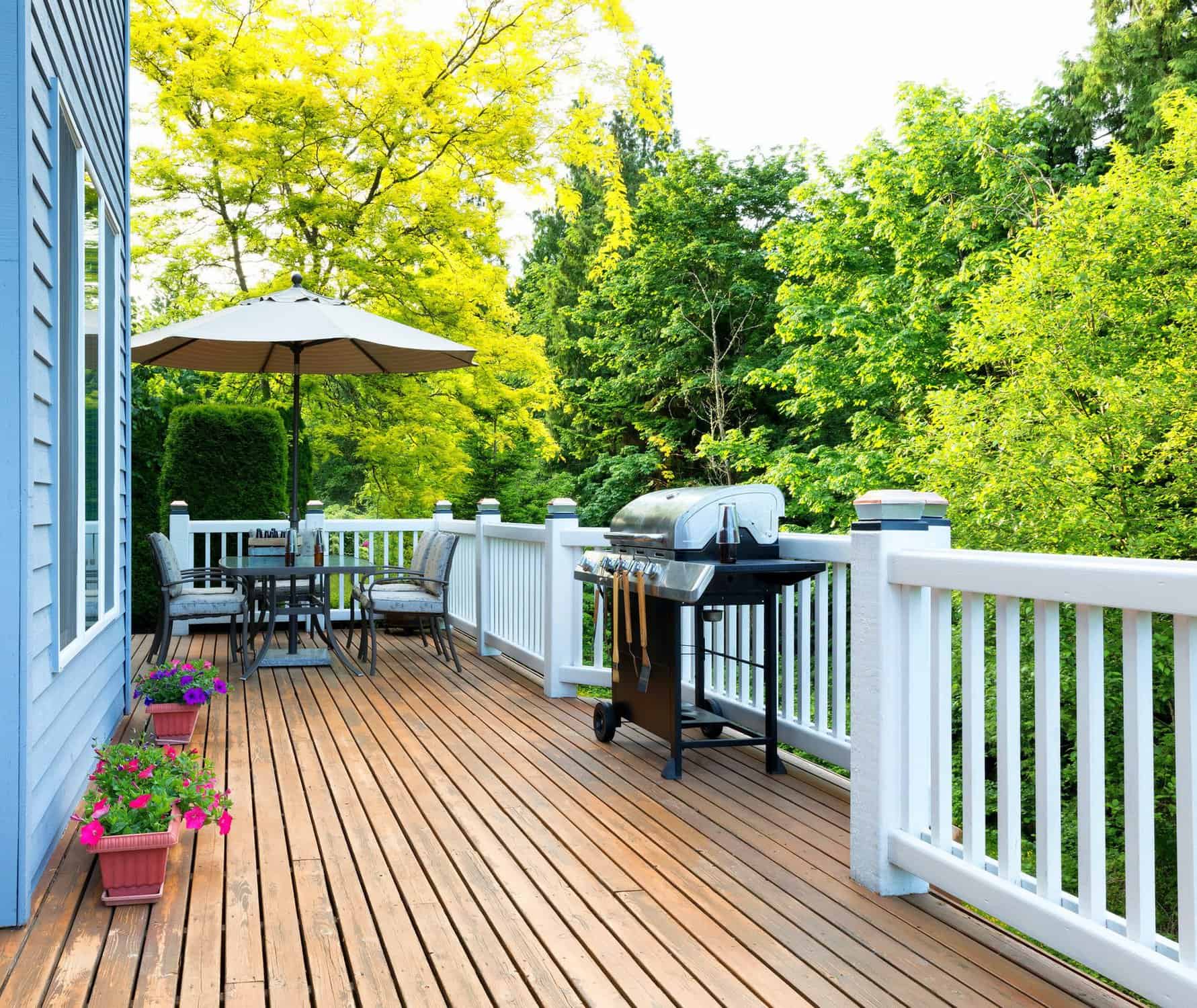
How Paint and Stain Actually Work on Wood
Before comparing the two side by side, it helps to understand what each product does once it hits your deck boards.
Paint sits on top of the wood. It forms a surface coating that fully covers the boards, concealing texture and grain for a smooth appearance. That film blocks moisture, hides cracks, and opens up a wide color palette, so you can match your home’s trim or go bold with something entirely different.
Stain works from the inside out. A good deck stain soaks deep into the wood fibers and becomes part of the wood itself, creating a breathable barrier that repels moisture while letting the wood expand and contract naturally with temperature changes.
That difference in how they bond to the wood drives every other comparison below.
Deck Painting vs Staining in San Antonio: How Long Each Finish Lasts
This is usually the first question homeowners ask, and the numbers are worth knowing before you commit.
A well-applied deck paint job lasts 5 to 10 years. Solid stains generally last about 4 to 6 years, and semi-transparent stains 2 to 4 years, before they need reapplication.
On paper, paint wins. But in San Antonio’s climate the story gets more complicated. The UV load here degrades finishes, warps improperly dried lumber, and drives the thermal expansion and contraction that loosens fasteners over time.
Summer delivers relentless UV and long stretches in the upper 90s and past 100°F. That constant expansion and contraction is the enemy of any surface film, which is exactly what paint is.
As boards expand in heat and contract in cooler temperatures, the paint film stretches and compresses until it cracks, chips, and peels. Once moisture gets under a peeling film, the damage accelerates fast.
Stain does not peel the same way because it is already inside the wood. It protects against UV, moisture, and mildew while letting the wood breathe, which helps it resist cracking and peeling as the wood moves.
The practical difference: a painted deck that starts to fail is a bigger project, since paint is very difficult to remove and the path back to bare wood is labor-intensive. A stained deck that needs refreshing is far simpler, often just a wash and reapplication with no sanding or stripping.
You can read more about application methods in our post on the best way to stain a deck, which compares four approaches for Central Texas homeowners.
What the San Antonio Climate Does to Your Deck Finish
Most advice online about paint versus stain is written for cooler, more forgiving climates, and it may not translate here. No wood is totally resistant to the sun. Hardwood, redwood, cedar, or pressure-treated lumber alike will eventually gray under prolonged UV exposure, which is a sign of surface degradation.
For San Antonio specifically, three forces work against any deck finish.
- Intense UV radiation. Day after day of direct sun slowly breaks down paint and stain, fading colors and weakening protective coatings. A south- or west-facing deck in Helotes or Shavano Park can spend six or more hours in direct afternoon sun during summer.
- Temperature swings. San Antonio sits in a semi-arid zone where daytime temperatures routinely swing 20 to 30 degrees between morning and afternoon, especially in spring and fall. That repeated expansion and contraction is particularly hard on paint films.
- Moisture and humidity. Humidity and occasional rainstorms drive moisture into exposed wood. When it finds its way under a cracked paint film, you can get rot beneath a surface that still looks fine from a distance.
- For these reasons, the USDA Forest Products Laboratory recommends penetrating finishes, like semitransparent stains, for wood decks, since film-forming finishes are more prone to peeling on horizontal surfaces. That said, paint still has its place, particularly on older, heavily damaged wood.
When Paint Makes More Sense for Your Deck
The decision tips toward paint when certain conditions are true of your deck.
- Your wood has significant visible damage. Stain enhances grain, which also means it reveals cracks, splits, and weathered areas. Paint’s opaque coverage hides all of that and gives older wood a clean, fresh look.
- You have already painted it before. You can paint over stain, but stripping paint down to bare wood so you can stain is a major labor investment. If your deck is already painted, continuing to paint is almost always the practical path.
- You want maximum color flexibility. Paint comes in virtually any color, so you can match your home’s exterior or create bold contrasts. Stain colors, while wider than they used to be, stay mostly in the brown and natural-tone range.
- Foot traffic is heavy. A paint film is thicker, harder, and more scuff-resistant than most deck stains, so high-traffic zones like stairs and entries hold up well under a quality deck paint.
When Stain Makes More Sense for Your Deck
For most wood decks in good to fair condition across the San Antonio area, stain tends to be the lower-risk, lower-maintenance choice over time.
- Your wood is in good shape. If the boards are solid, the grain is still visible, and there is no structural damage, stain protects and preserves what is already there while enhancing the natural grain and texture.
- You want simpler long-term maintenance. With stain you are not stripping and repainting as the finish ages. For homeowners in Fair Oaks Ranch or Boerne who want to stay ahead of deck upkeep without major disruptions, that matters year over year.
- You have cedar boards. Cedar and cypress are popular in Central Texas and hold stain particularly well, and staining lets you control the degree of opacity. You can learn more in our post on the best stain for cedar fence, which covers the same product categories that apply to deck boards.
- You are concerned about trapped moisture. Stain soaks into the wood pores and lets the wood breathe and release moisture naturally, so you avoid the bubbling or peeling that can happen with paint and the water damage that follows.
The Stain Opacity Question
One detail that trips up homeowners is that stain is not a single product. Opacity varies widely, and that changes both the look and the lifespan.
For San Antonio specifically, the more pigmented the stain, the more resistant it is to moisture and UV. A clear or light semi-transparent stain may look beautiful at first but can need reapplication within a year or two here, while a solid or semi-solid stain gives better protection and still keeps some of the wood’s character visible. Product choice matters too, and an experienced painter can steer you toward a formulation suited to San Antonio’s sun and occasional rain.
What Deck Painting vs Staining in San Antonio Actually Costs
Both options vary with deck size, wood condition, product quality, and labor. A few cost realities to keep in mind.
On a per-gallon basis, stain is usually the more budget-friendly option at roughly $20 to $35, while paint runs about $30 to $60 per gallon.
The price on the can is not the whole story. Painting a deck properly also means a wood preservative and a quality primer so the paint adheres and lasts, which raises the upfront cost.
Factor in reapplication cycles and stain often comes out more cost-effective over a 10-year period, assuming you stay on top of maintenance. Paint’s longer lifespan means fewer full treatments, but the removal cost when it does fail can erase those savings quickly.
Our post on what affects exterior painting cost covers the prep and labor variables that drive pricing on exterior wood surfaces.
Timing Matters in San Antonio
Whichever finish you choose, the time of year you schedule the work affects how well it bonds and how long it holds. The best window to stain a deck in San Antonio is during mild weather, when temperatures are moderate and humidity is low, which usually means spring and fall for proper absorption and lasting protection.
If the wood was not cleaned and prepped correctly, if the finish went on in direct sun, or if it was above 90 degrees during application, it will not bond well. That applies to paint and stain alike. Rushing either onto unprepared or too-hot wood is one of the most common reasons deck finishes fail early here.
Surface prep, cleaning, sanding, and repairing loose or damaged boards before the finish goes on, is not optional. It is the step that separates a deck that looks great for years from one that starts peeling before summer is over.
How Magna Painting of San Antonio Approaches Deck Projects
At Magna Painting of San Antonio, the paint-or-stain decision is one we work through with you before a brush or sprayer touches your deck. Robert Villarreal and the team look at your wood species, the current condition of the surface, how much direct sun the deck gets, your maintenance preferences, and what you want the finished product to look like.
That conversation shapes a recommendation that fits your actual deck, not a generic answer. And because Magna Painting collects no payment until the project is 100% complete and you are satisfied, you are never locked in before you have seen the final result.
Magna Painting also offers a 2-year warranty on exterior painting work, covering peeling, flaking, or failing paint not caused by homeowner damage or extreme weather. That confidence behind the work matters when you are committing to a project that has to hold up through San Antonio summers.
Ready to stop guessing and get a clear recommendation for your deck? Schedule a no-pressure consultation and free estimate, and we will tell you honestly if paint or stain is the better call and walk you through the process from start to finish. When you are ready, contact Magna Painting of San Antonio at 210-796-6601.